What Should a Contractor Lead Actually Cost?
Stop comparing your lead cost to random benchmarks. Here's the simple math that tells you exactly what a lead is worth in YOUR business.
By TMG USA Team

Every contractor eventually asks the same question: “Am I paying too much for leads?”
And every marketing company answers with a benchmark, some national average that’s supposed to tell you whether your number is good. Here’s the problem: that benchmark is nearly useless. A lead for a $400 drywall patch and a lead for a $90,000 home addition are not the same product, and pretending one average covers both is how contractors end up making bad decisions in both directions, overpaying for cheap-job leads and walking away from expensive leads that would have printed money.
So instead of a benchmark, let’s give you the math. It takes five minutes, uses your own numbers, and answers the question permanently.
Why lead costs vary so much
Four things drive what a lead costs, and they explain almost every difference you’ll ever see:
- Job value. Channels price against competition, and competition follows money. Trades with five-figure tickets attract more bidders for the same searches, which pushes lead costs up, and that’s rational, because the job supports it.
- Your market. The same search costs different amounts in different cities. Dense metro markets with many competing contractors price higher than smaller markets. There’s no fighting this; there’s only knowing your local number.
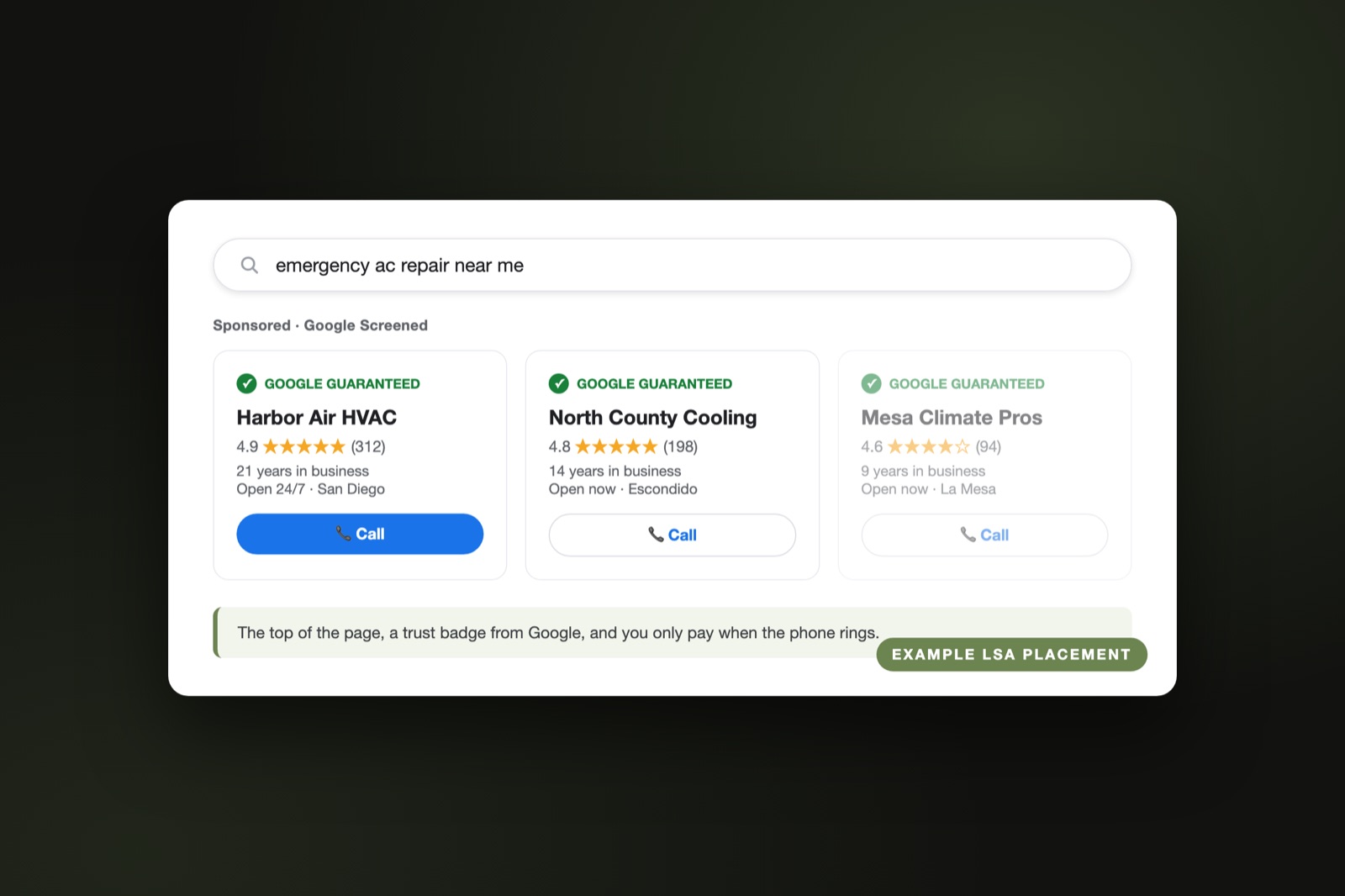
- The channel. A lead from Google Local Service Ads (someone actively searching with a badge of trust attached) is priced differently than a lead from a Facebook form (someone earlier in their decision). Neither is “better”, they’re different stages of the same buyer.
- Exclusive vs. shared. This is the big one contractors miss. A shared lead from an aggregator platform gets sold to several contractors at once. Even if it looks cheaper per lead, you’re only winning a fraction of them, so the effective cost per job is often far higher than an exclusive lead that costs more upfront.
The only metric that matters: cost per booked job
Cost per lead is a vanity metric. Leads don’t pay your crews, booked jobs do. Two channels can produce identical lead costs and wildly different business results once you account for how many of those leads actually turn into work.
Here’s the chain worth tracking:
Cost per lead → cost per estimate → cost per booked job
A channel that delivers cheap leads that rarely book is more expensive than a channel with pricey leads that close half the time. Until you follow leads through to booked jobs, you genuinely don’t know which of your channels is winning.
Calculate your own maximum lead cost
Grab your numbers and fill in this formula:
- Average job value, total revenue from a typical job in the trade/service you’re marketing.
- Gross margin, the percentage of that revenue left after direct job costs (materials, labor).
- Close rate, the fraction of leads that become paying jobs. Closing 3 of every 10 leads means 0.3 in the formula. Be honest; count from lead, not from estimate.
- Target marketing share, how much of a job’s gross profit you’re willing to spend acquiring it. Many contractors land somewhere around 10-20%, but this is your call, it’s a business decision, not a rule.
Then:
Max lead cost = Average job value × Gross margin × Target marketing share × Close rate
Work an example with your own numbers and something interesting usually happens: the answer is often higher than what you’re currently squeamish about paying, especially in high-ticket trades. Contractors regularly cap themselves at a lead price that “feels” expensive while the math says a lead twice that price would still be wildly profitable.
The reverse also happens: the math sometimes shows that the “cheap” shared leads you’ve been buying are actually your most expensive channel once the close rate gets divided across every competitor who bought the same homeowner.
What to do with your number
- Audit your channels against it. Any channel producing booked jobs below your max is a channel to scale, not question.
- Stop comparing across trades and markets. Your painting company’s number has nothing to do with a roofer’s in another state.
- Fix close rate before chasing cheaper leads. If your close rate is low, halving your lead cost helps less than answering the phone faster. Speed-to-lead is the cheapest improvement in this entire equation.
- Re-run the math yearly. Job values, margins, and markets move. Your max lead cost should move with them.
The marketing engine view
Here’s the deeper pattern we see after building lead generation systems across dozens of trades: contractors who know their max lead cost make calm, fast decisions. They scale winning channels without flinching at the invoice, kill losers without sentiment, and never get seduced by “cheap leads” that don’t book.
Contractors who don’t know their number ride an emotional rollercoaster with every marketing bill, and usually underspend on the exact channels that would grow them.
If you’d like a second set of eyes on your math, your real close rates, your market’s actual lead prices, and which channels fit your trade, that’s literally what our free strategy call is for. Bring your numbers. We’ll bring your market’s.