5 Google Business Profile Mistakes Costing Contractors Calls
Your Google Business Profile decides who gets the call from the map results. Here are the five mistakes we fix most often, and how to fix each one.
By TMG USA Team
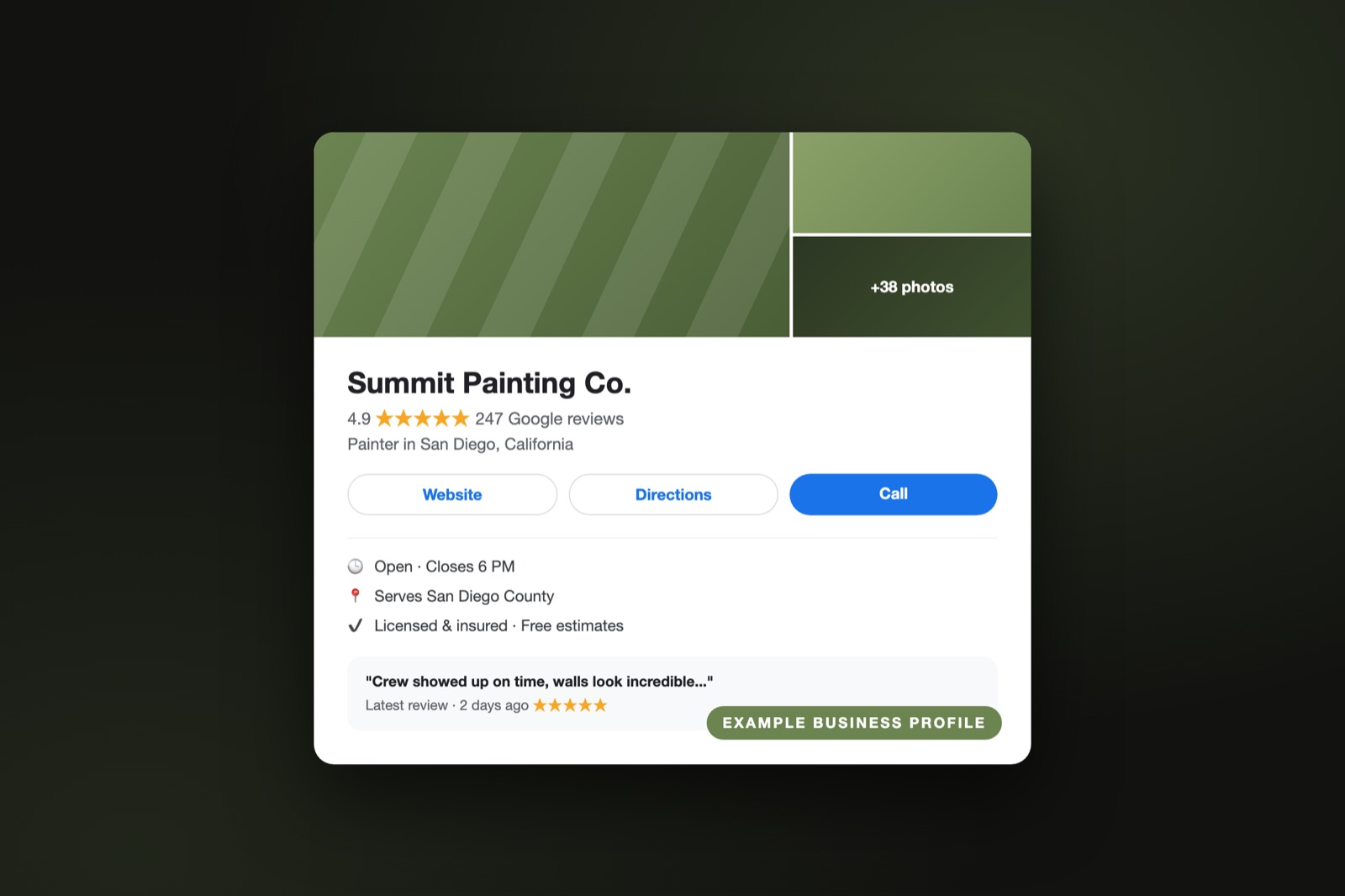
When a homeowner searches your trade, Google shows three businesses on the map before anything else. Most of the calls in your market go to those three, and whether you’re among them is decided almost entirely by your Google Business Profile.
Here’s the good news: most contractor profiles are so neglected that fixing yours is one of the highest-leverage moves available. These are the five mistakes we find most often when we audit profiles, in roughly the order they cost you.
1. Wrong or missing categories
Your primary category is the single strongest signal on the profile, it tells Google which searches you belong in. And it’s wrong constantly: remodelers listed as “General Contractor,” HVAC companies missing “Furnace Repair Service,” specialty contractors filed under categories so broad they compete with everyone and rank for no one.
Secondary categories matter too. Every legitimate category you skip is a set of searches you’ve quietly opted out of.
The fix: Look at what the businesses currently ranking in your 3-pack use as their primary category (tools exist for this, or just note what Google labels them). Match your primary to your true money service, then add every secondary category you genuinely serve. Review this seasonally, Google adds new categories regularly.
2. Ignoring reviews, both getting them and answering them
Review count, rating, and recency drive both your ranking and the homeowner’s choice. Two profiles side by side, one with a large, growing review base and one with a dozen old reviews, the call goes the same direction almost every time.
And responses matter more than most contractors think. Prospective customers read your replies as a preview of what you’re like to work with. A thoughtful response to a negative review often does more persuading than ten five-star ratings, because it shows how you handle problems.
The fix: Make the ask automatic, same trigger every time (final walkthrough, final invoice), same simple link. Consistency beats charisma; a steady trickle outranks an occasional flood. Then respond to everything: short and grateful for the good ones, calm and factual and solution-oriented for the bad ones. Never argue. You’re writing for the next reader, not the reviewer.
3. No photos of your actual work
Google’s own guidance and every study of profile engagement agree: profiles with real, recent photos get dramatically more clicks and calls than profiles with a logo and a stock image. Homeowners are hiring what they can see. A crisp before-and-after gallery answers “are these people legit?” faster than any description.
Meanwhile, most contractor profiles have four photos from the day the profile was created.
The fix: Build a pipeline, not a project. Crews snap two or three photos per job, before, after, one in progress, and someone uploads a handful weekly. Real job sites beat staged shots. Geotagged, recent, steady. Within a few months your profile becomes a portfolio that no thin competitor profile can match.
4. Letting the profile go stale
Google rewards profiles that look like active businesses: recent posts, fresh photos, questions answered, hours accurate, services current. A profile untouched since 2022 sends the opposite signal, to the algorithm and to the homeowner comparing you against a competitor whose profile was updated this week.
The Q&A section deserves special mention: anyone can ask a question on your profile, and if you don’t answer, strangers will. We’ve seen wrong service areas, wrong pricing, even competitors’ recommendations sitting in unanswered Q&A.
The fix: A monthly rhythm covers it, a post or two (a finished project works perfectly; you already have the photo), a scan of Q&A, a check that hours and services are current. Better yet, seed the Q&A yourself: post the questions customers always ask and answer them properly. Thirty minutes a month, compounding returns.
5. Not tracking what the profile produces
Most contractors have no idea how many calls their profile generates, which means the profile never gets credit, so it never gets investment, so it stays weak while budget flows to channels with better-looking reports. The irony: profile calls are often among the cheapest leads a contractor has.
The fix: At minimum, check your profile’s native performance stats monthly (calls, direction requests, website clicks, it’s all in there). Better: use call tracking that distinguishes profile calls from other sources, so when you calculate cost per booked job by channel, the profile competes fairly. Once contractors see the number, the profile stops being an afterthought, every time.
The compounding fix
None of these fixes is hard. What makes the profile powerful is that they compound: better categories put you in more searches, photos and activity win more clicks from those searches, reviews convert more of those clicks to calls, and tracking proves it, which funds doing more of all of it. That loop is exactly what we build in our Google Business Profile optimization service, and it’s usually the first component we tune in any client’s marketing engine.
Want to know how your profile stacks up in your market right now? We audit it as part of every free strategy call, categories, reviews, photos, rankings across your service area, and you keep the findings either way.